NetElla HomeLab
Published on July 08, 2026
NetElla HomeLab
Category: Infrastructure Project
Period: 2022 - Present
Status: 🟢 Active
Role: Infrastructure Engineer, System Administrator, Developer

About the Project
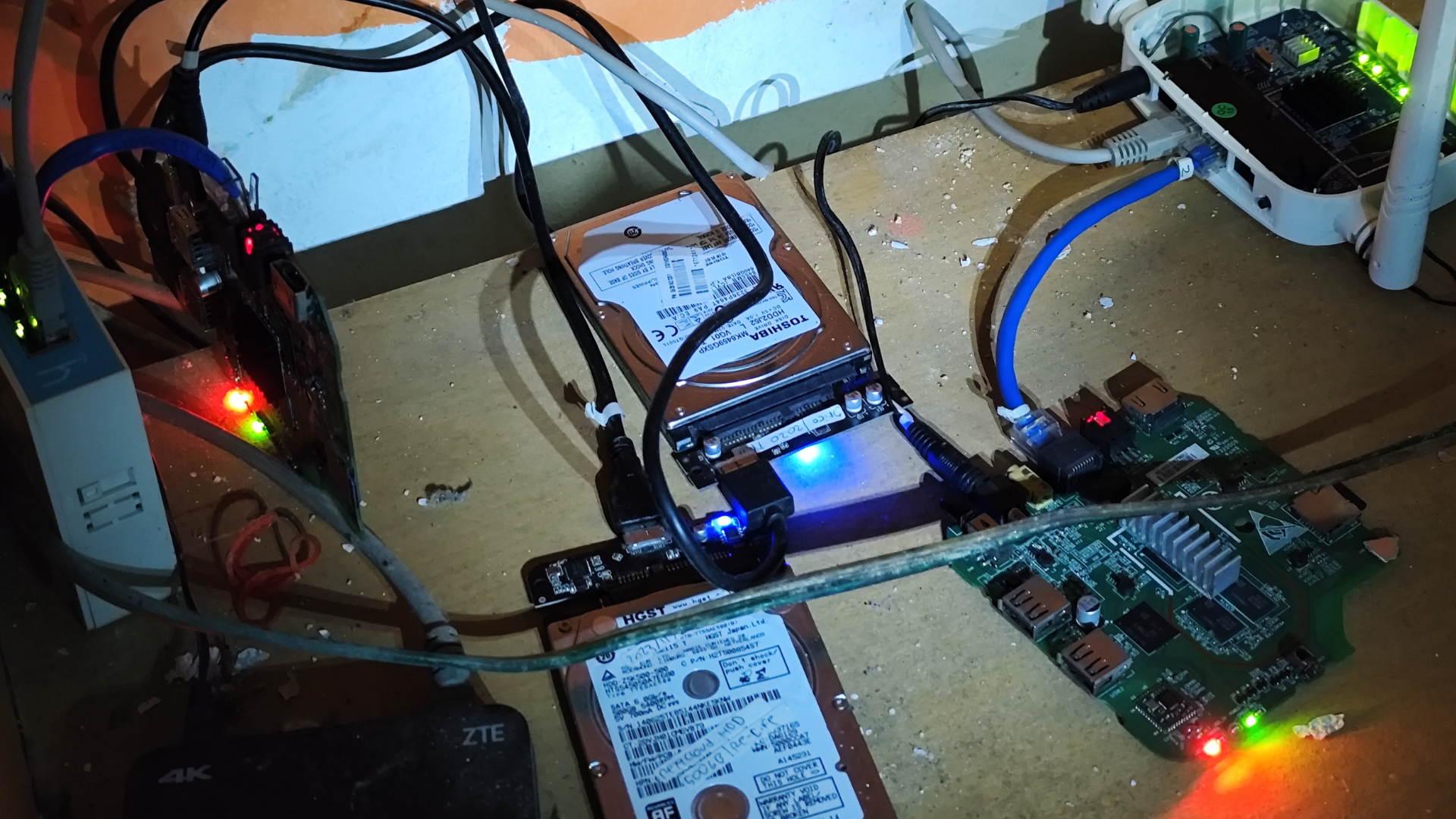
NetElla HomeLab is a self-hosted infrastructure platform that I have built and operated since 2022 as a learning environment, technology playground, and foundation for various public and personal services used on a daily basis.
Originally started as a practical implementation of the knowledge I gained during my Computer and Network Engineering (TKJ) studies, the project has evolved into a production environment that hosts public websites, private cloud storage, server monitoring systems, backup services, and a wide range of open-source applications.
The entire infrastructure runs on a combination of x86 systems and Single Board Computers (SBCs) located in a residential environment without a public IP address or reliance on paid cloud hosting services.
Today, NetElla HomeLab serves as the backbone of several projects I actively maintain, including HWPure, HakimYusa, and the TKJ Blog.
Project Highlights
✅ Hosting public websites without a Public IP using Cloudflare Tunnel
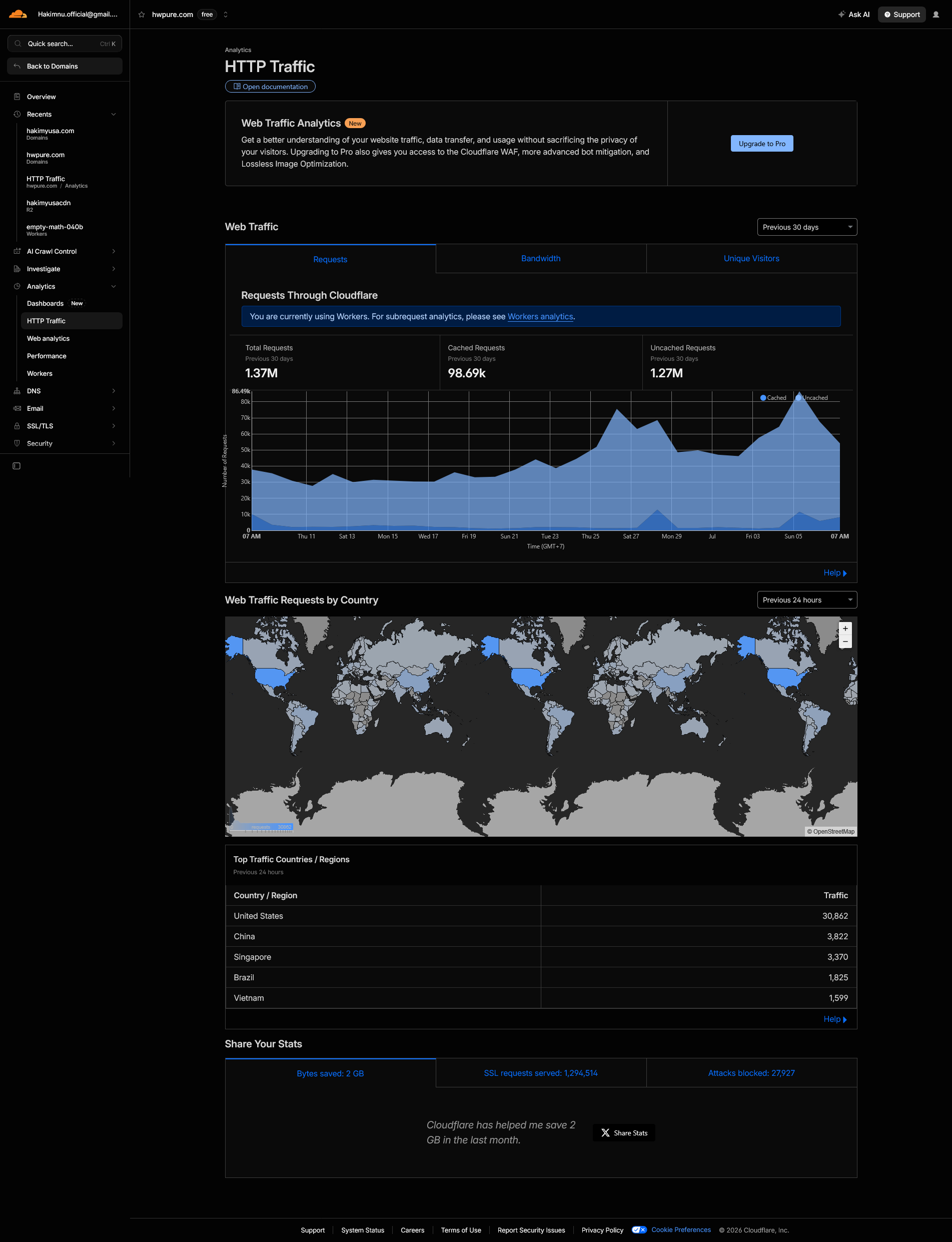
✅ Handling more than 1.5 million requests per month from a self-hosted environment
✅ Providing private cloud storage accessible from anywhere
✅ Managing more than 20 self-hosted services across ARM and x86 platforms
✅ Operating monitoring, backup, and container management systems independently
✅ Serving as the infrastructure foundation for multiple production websites and personal services
Infrastructure
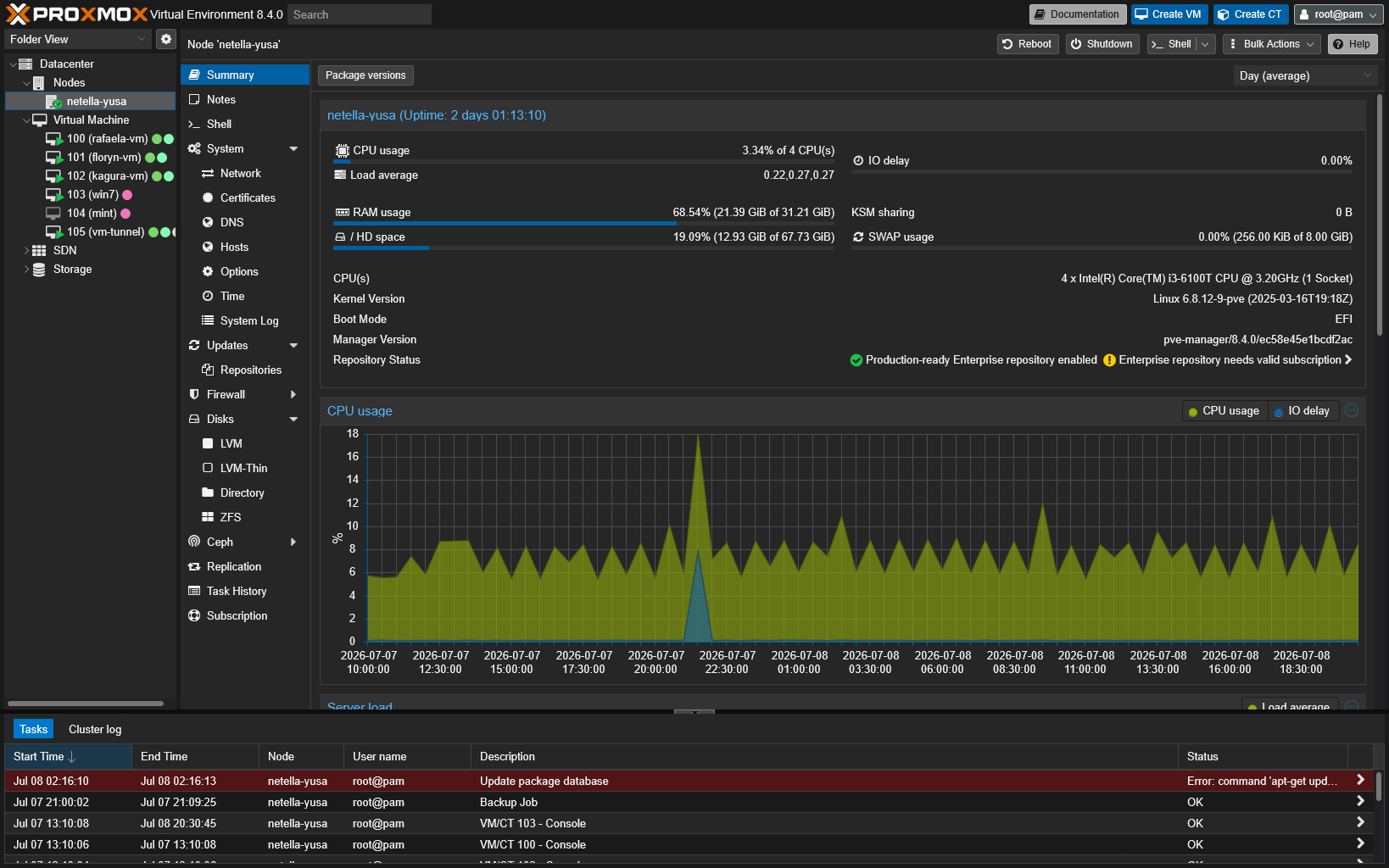
Dell OptiPlex 5050 Micro
- CPU i3 6100T
- 32GB RAM
- Proxmox VE 8
- 256GB NVMe SSD
- 640GB HDD
- 250GB External SSD
Orange Pi 5 Pro
- Rockchip RK3588S
- 16GB RAM
- Armbian Ubuntu 24.04
- 512GB NVMe SSD
- 4TB HDD
Orange Pi Zero 3
- Allwinner H618
- 4GB RAM
- Armbian Debian 12
- 64GB MicroSD
HG680P STB #1
- Amlogics S905X
- 2GB RAM
- Armbian Ubuntu
- 32GB MicroSD
HG680P STB #2
- Amlogic S905X
- 2GB RAM
- Armbian Debian 12
- 64GB MicroSD
- 640GB HDD
- 500GB HDD
Network & Connectivity
Internet Provider
- IndiHome Fiber
Internet Speed
- 100 Mbps Download
- 30 Mbps Upload
Public Access
- No Public IP Address (CGNAT)
Remote Access & Networking
- Cloudflare Tunnel
- Tailscale
Running Services
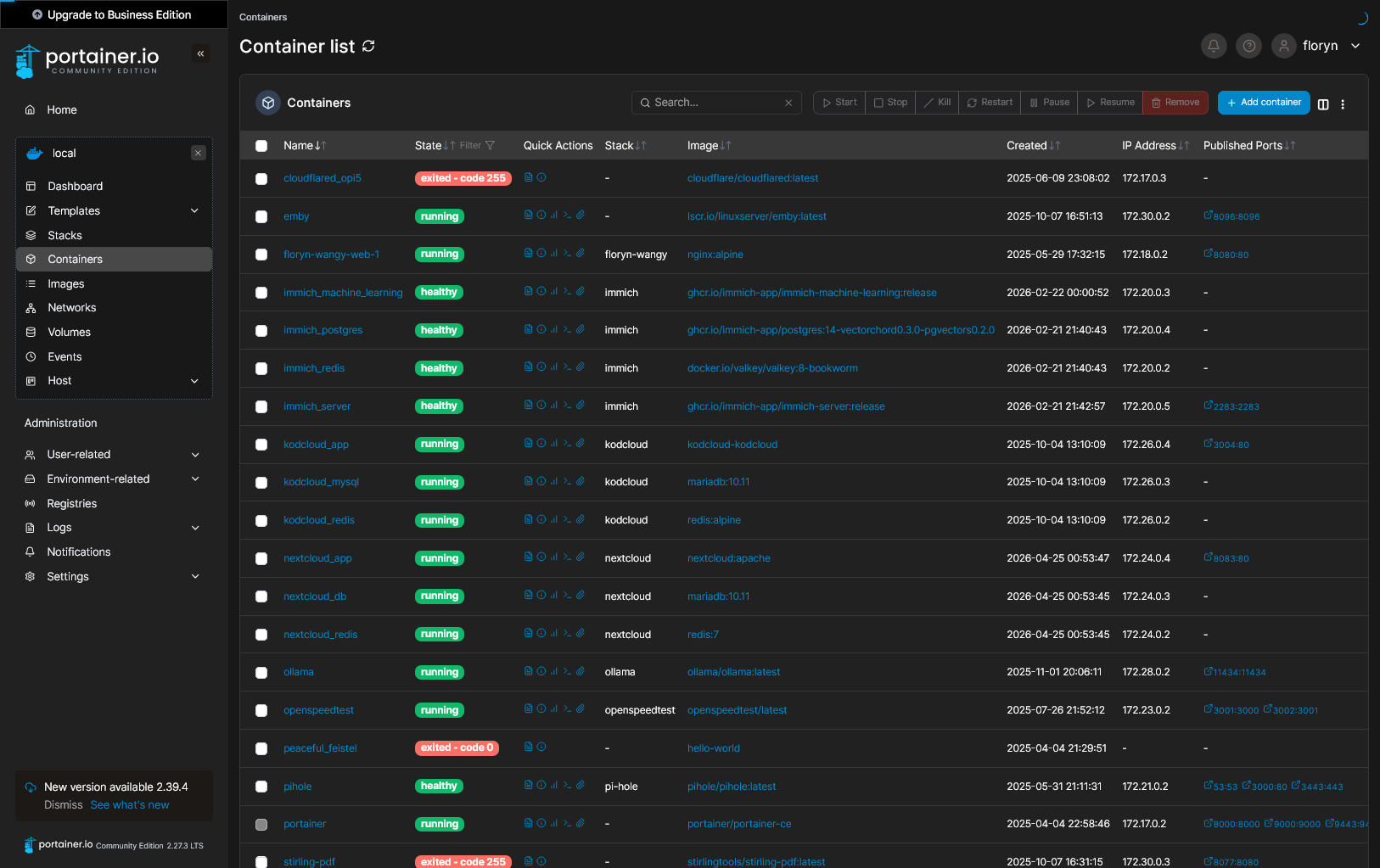
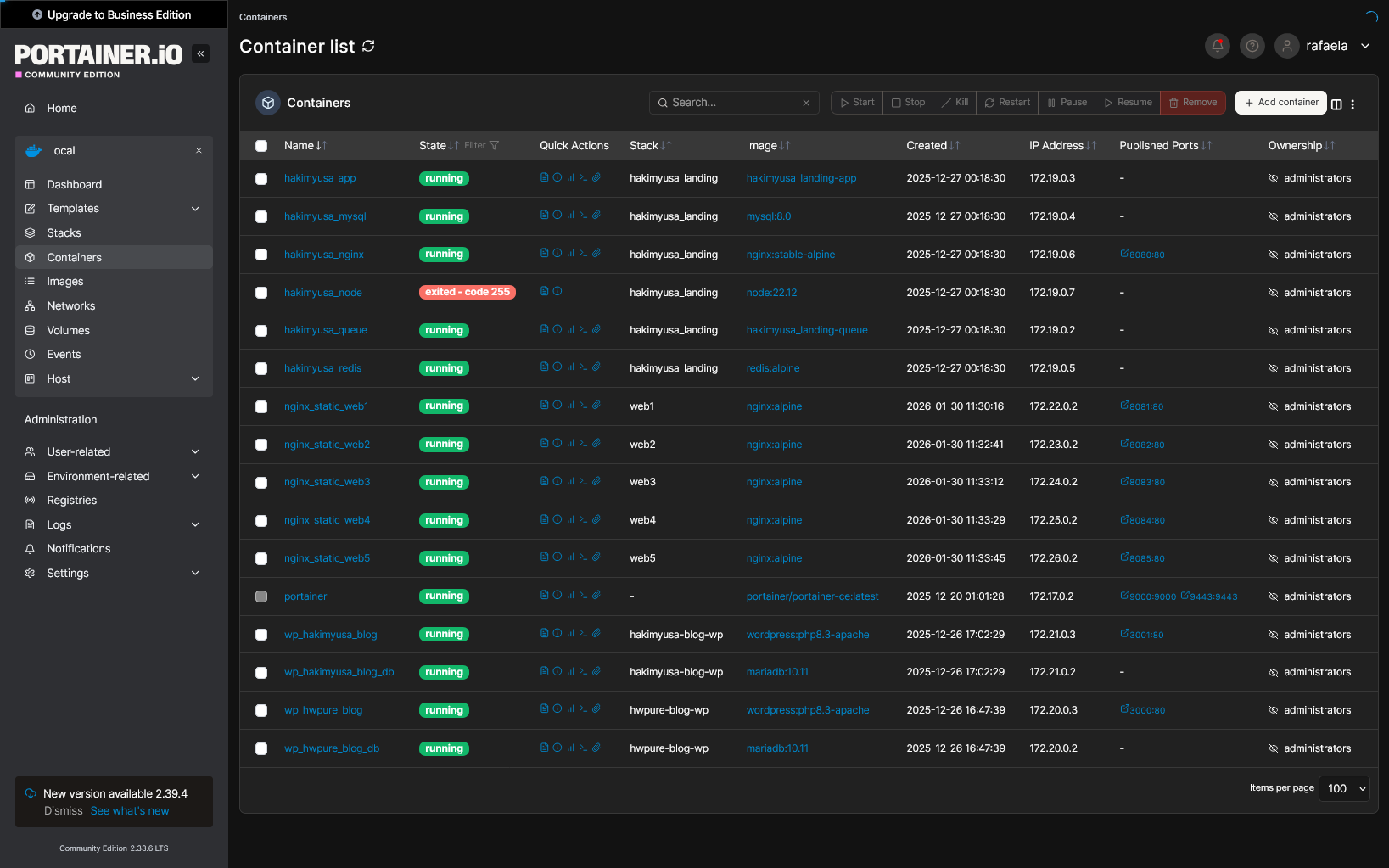
Public Services
- HWPure Community Benchmark Database
- HakimYusa Portfolio Website
- TKJ Blog
- WordPress Services
Storage & Cloud
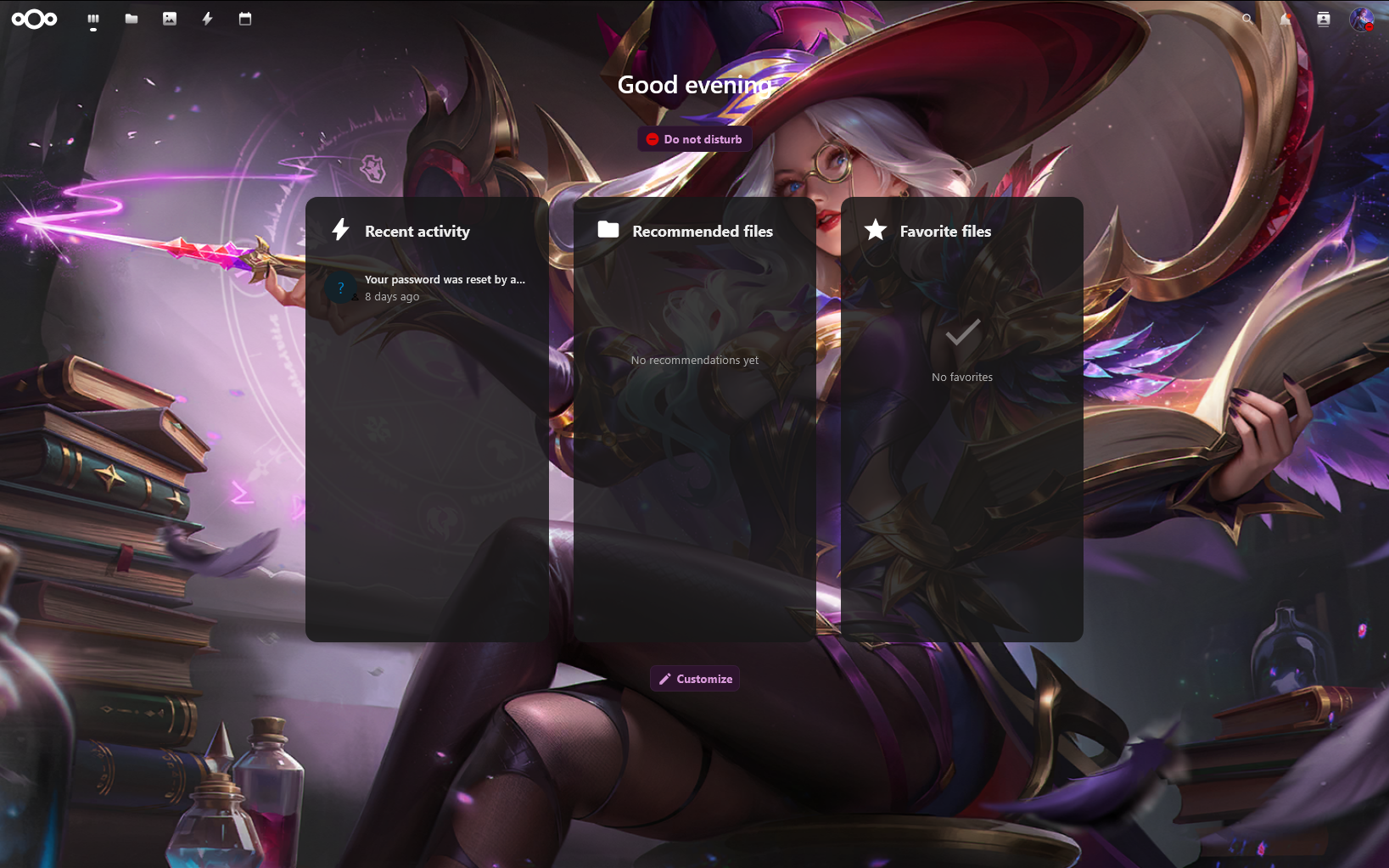
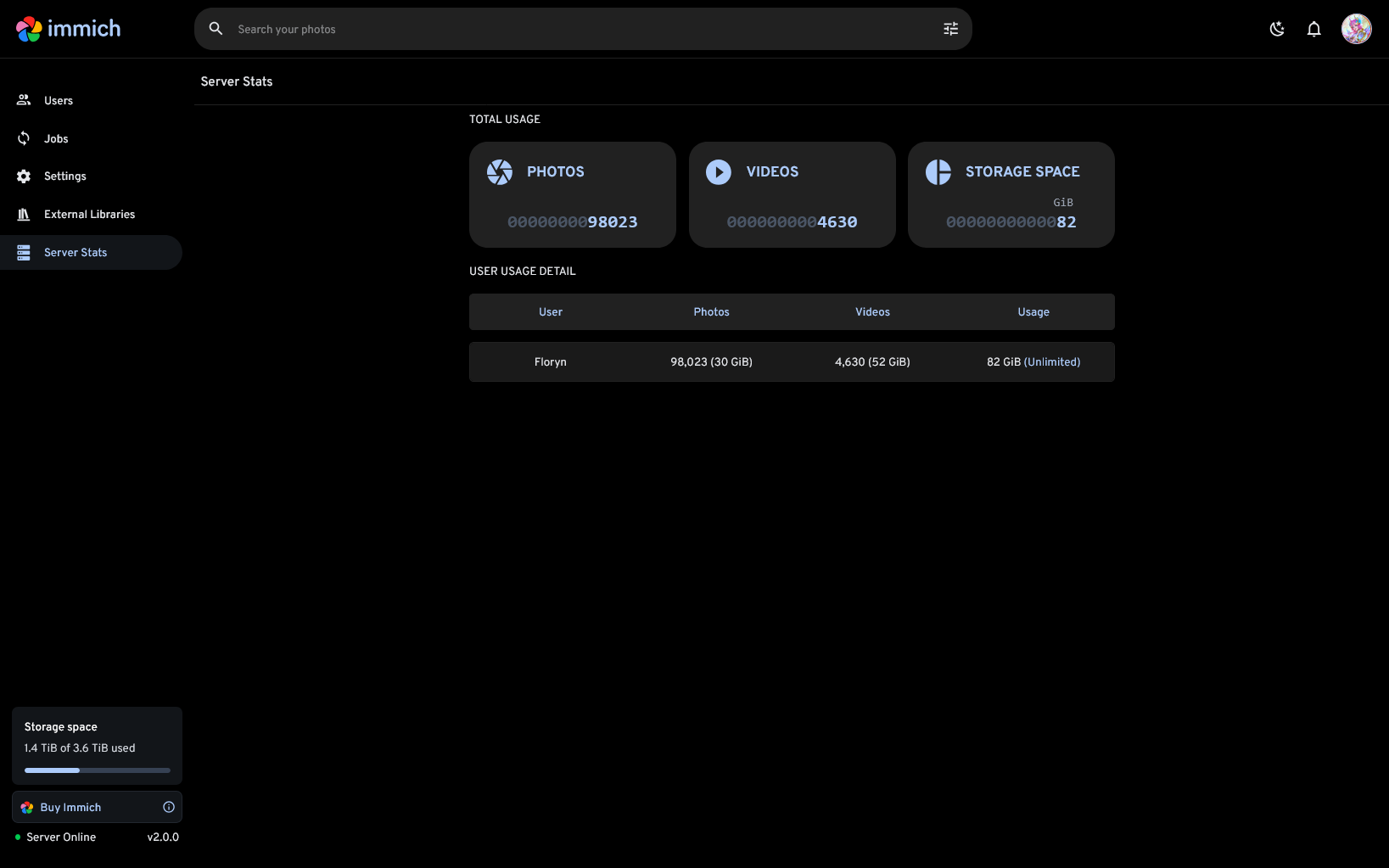
- Nextcloud
- Kodcloud
- Samba Share
Development & Collaboration
- Gitea
- n8n
Container & Infrastructure
- Docker
- Portainer
- Cloudflare Tunnel
- Tailscale
Monitoring & Analytics
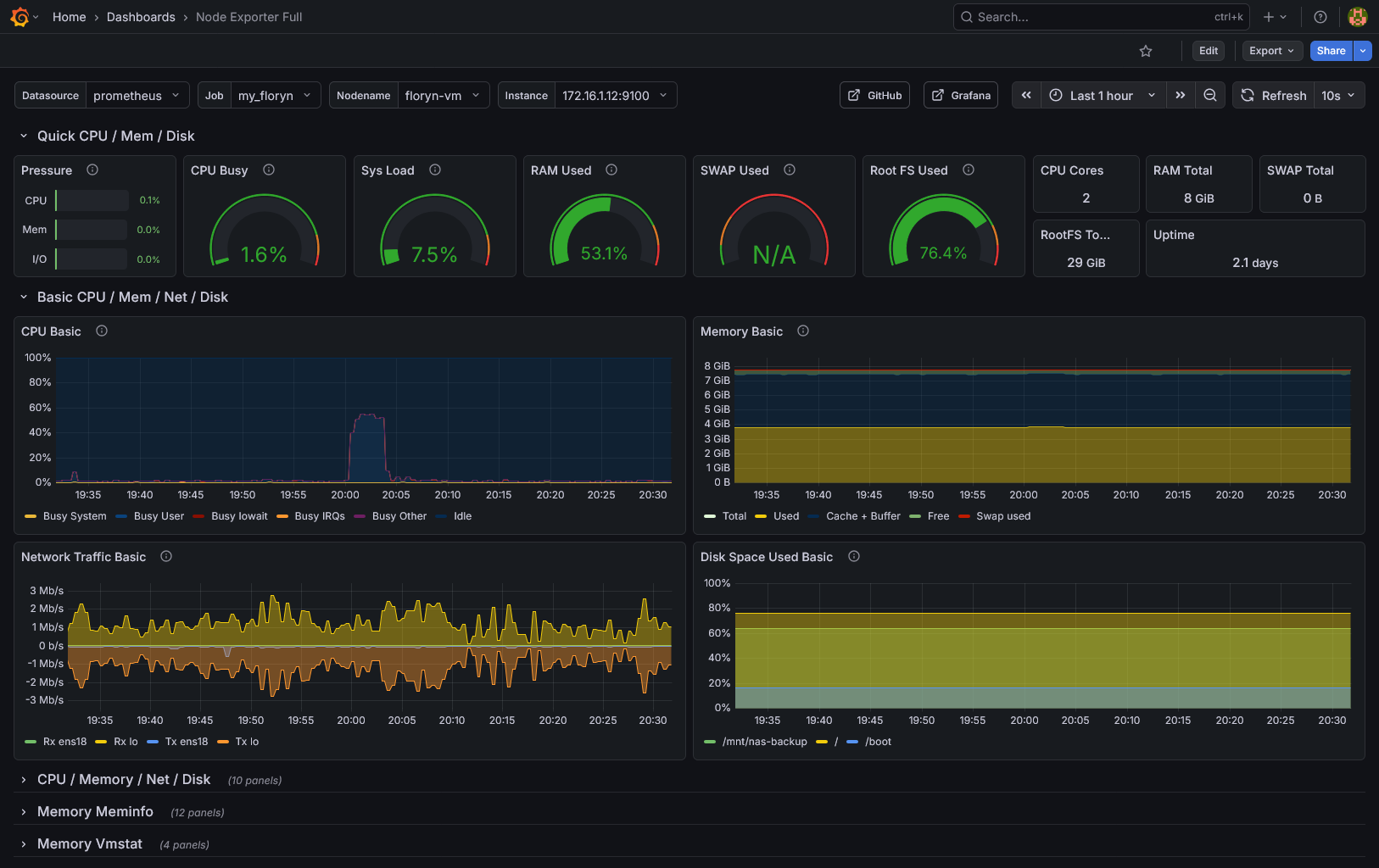
- Grafana
- Prometheus
Database & Backend
- MariaDB
- Redis
Media Services
- Immich
- Emby
Backup & Recovery
- Borg Backup
- rsync
Virtualization
- Proxmox VE
- CasaOS
Infrastructure Statistics
HWPure (Last 30 Days)
- 292,830 Unique Visitors
- 1.37 Million Total Requests
- 29 GB Data Served
- 2 GB Cached Data
- 5.74% Cache Hit Rate
HakimYusa (Last 30 Days)
- 10,580 Unique Visitors
- 140,890 Total Requests
- 3 GB Data Served
- 695 MB Cached Data
- 26.59% Cache Hit Rate
Availability
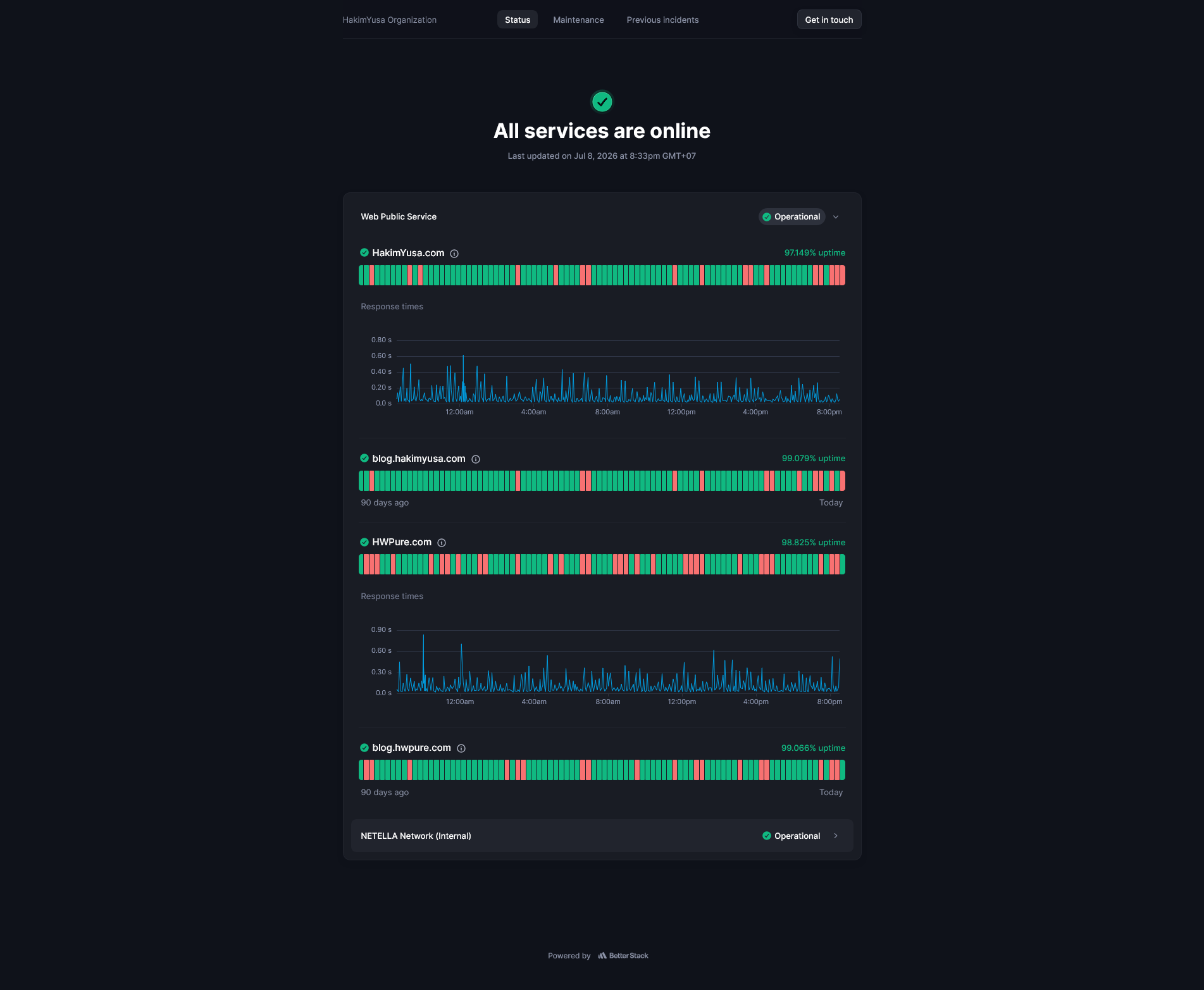
- Average uptime between 97% and 99%
- Monitored using BetterStack
Challenges
Hosting Public Websites Without a Public IP
Since the home internet connection operates behind CGNAT, public services cannot be exposed directly to the internet. To solve this challenge, all websites are published through Cloudflare Tunnel without requiring port forwarding or a VPS-based reverse proxy.
Data Backup Strategy
As the number of services and stored data continues to grow, designing a reliable backup strategy has become a critical part of maintaining data integrity and minimizing the risk of data loss caused by hardware failures.
Residential Infrastructure Limitations
Because the entire environment runs from a residential location, service availability still depends on local electricity and internet connectivity. Implementing a UPS and a secondary internet connection are among the planned future improvements.
Resource Optimization
Most services run on low-power devices such as Orange Pi boards and repurposed set-top boxes. Resource optimization plays an important role in ensuring stable and efficient operation across all systems.
Behind the Scenes
Unlike commercial cloud platforms that operate from large-scale data centers, NetElla HomeLab has been built gradually using a combination of x86 systems, Single Board Computers (SBCs), and repurposed hardware optimized for both production workloads and technology experimentation.
The infrastructure has evolved alongside real-world requirements, supporting public websites, private cloud storage, photo management, monitoring systems, backup services, and development platforms.
For me, NetElla HomeLab is more than just a collection of devices running 24/7. It serves as a personal laboratory for learning and experimenting with Linux administration, virtualization, networking, containerization, self-hosting, monitoring, backup strategies, and modern infrastructure management.
Proudest Achievements
- Successfully hosting public websites without a Public IP address.
- Providing private cloud storage accessible from anywhere.
- Eliminating the need for paid cloud storage subscriptions for personal photo and data backups.
- Operating multiple production services on infrastructure that I built and manage independently.
- Demonstrating that low-power hardware such as Orange Pi boards and repurposed set-top boxes can reliably serve real-world workloads with thousands of monthly visitors.
Tech Stack
Proxmox • Ubuntu Server • Debian • Docker • Portainer • Apache2 • MariaDB • Redis • Laravel • WordPress • Cloudflare Tunnel • Tailscale • Grafana • Prometheus • Nextcloud • Immich • Gitea